Energy Performance Certificates (EPC) Explained: Your Complete Guide

Last month, a couple called our Farnborough surveyors office in a panic. They'd just had their offer accepted on a lovely 1930s semi in Hampshire, but the estate agent mentioned the EPC rating was 'only a D.' "Is that bad?" they asked. "Should we be worried?" This conversation happens weekly, so let me clear up the confusion around Energy Performance Certificates once and for all.
As RICS chartered surveyors working across Hampshire and Surrey, we see hundreds of EPCs during property surveying. Some homeowners obsess over ratings; others ignore them completely. The truth? EPCs matter more than you might think, especially with new legislation coming.
What Is an Energy Performance Certificate?
An EPC is like a report card for your property's energy efficiency. Introduced in 2007, these certificates rate how efficiently a home uses energy for heating, hot water, and lighting. Think of it as similar to the energy labels you see on fridges or washing machines.
Every residential property for sale or rent needs a valid EPC. The certificate shows:
- Current energy efficiency rating: Where your property sits on the A-G scale
- Potential rating: What you could achieve with recommended improvements
- Environmental impact: Your property's carbon dioxide emissions
- Estimated energy costs: Typical fuel bills for the property
- Recommendations: Specific improvements to boost efficiency
Our chartered building surveyors often review EPCs during surveys, assessing whether recommendations are realistic and cost-effective for clients in Farnborough, Guildford, Woking, and throughout the surrounding areas.
Understanding EPC Ratings: The A-G Scale
EPCs use a color-coded scale from A (most efficient) to G (least efficient). Here's what each rating actually means in the real world:
Band A (92-100) - Dark Green
Extremely rare in existing homes. You're looking at cutting-edge eco-homes with exceptional insulation, triple glazing, solar panels, heat pumps, and mechanical ventilation. Annual energy costs might be under £300. We've surveyed maybe three Band A properties in ten years across Hampshire and Surrey.
Band B (81-91) - Light Green
Modern, well-insulated homes or older properties with comprehensive retrofits. Expect double glazing, good loft and wall insulation, efficient boilers, and possibly renewable energy. Annual bills typically £400-700. New builds in Farnborough developments often achieve Band B.
Band C (69-80) - Yellow-Green
The government's target for all rental properties by 2025 (now delayed to 2028). Decent energy efficiency with double glazing, cavity wall insulation, loft insulation, and a reasonably modern boiler. Annual costs around £700-1,000. Many 1990s-2010s homes fall here.
Band D (55-68) - Yellow
The current average for UK homes. Typically older properties with some improvements—maybe double glazing but limited insulation, or good insulation but an aging boiler. Bills often £1,000-1,400 annually. Most properties our surveyors in Farnborough assess fall into Band D.
Band E (39-54) - Orange
Below average efficiency. Common in Victorian and Edwardian properties with solid walls, older windows, or outdated heating. Current minimum for rental properties. Annual costs £1,400-1,800. These homes need investment to improve comfort and reduce bills.
Band F (21-38) and G (1-20) - Red
Very poor efficiency. Illegal to rent since April 2020 (unless exempt). Usually older properties with no insulation, single glazing, and ancient heating systems. Bills can exceed £2,000+ annually. Our chartered building surveyors and construction consultants often recommend comprehensive retrofitting for these properties.
EPC certificates display energy efficiency on an easy-to-read A-G scale
When Do You Need an EPC?
Understanding EPC requirements saves hassle during property purchase or sale. Here's when you legally need one:
Selling Your Property
You must have a valid EPC before marketing your home. Estate agents can't legally advertise without seeing the EPC first. Get it done early—waiting until offers come in causes delays.
One of our Farnborough clients last year had their sale nearly fall through because they hadn't arranged an EPC. The buyers' solicitor spotted the missing certificate during searches, causing a three-week delay. Don't let this happen to you.
Renting Your Property
Landlords must provide a valid EPC to prospective tenants. Plus, your property must achieve at least Band E (some exemptions apply). From 2028, the government plans to require Band C for all rentals—a significant challenge for older properties across Hampshire and Surrey.
Building a New Property
New builds require EPCs before occupation. Modern building regulations ensure most new homes achieve Band B or better. Our RICS chartered surveyors often conduct snagging inspections on new builds, checking that actual construction matches the EPC predictions.
Exemptions
Some properties don't need EPCs:
- Listed buildings (official protection status)
- Temporary buildings used less than 2 years
- Stand-alone buildings under 50m² floor area
- Industrial sites, workshops, and agricultural buildings
- Places of worship
- Properties being demolished
Getting an EPC: The Process
Arranging an EPC is straightforward, but choosing the right assessor matters. Here's what happens:
Finding an Accredited Assessor
Only accredited domestic energy assessors can produce EPCs. Find qualified assessors through official registers. Costs vary but typically range £60-120 for standard properties in Farnborough and surrounding areas. Larger or unusual properties cost more.
As building surveyors in Farnborough, we're not EPC assessors ourselves (that's a different qualification), but we work alongside assessors regularly and can recommend reliable local professionals.
The Assessment Visit
Assessors spend 30-60 minutes examining your property. They'll measure rooms, photograph features, and record:
- Property type, age, and construction
- Wall construction and insulation levels
- Window types (single, double, or triple glazed)
- Heating system type, fuel, and efficiency
- Hot water system and controls
- Lighting types throughout
- Renewable energy installations (solar, heat pumps)
They don't conduct invasive investigations. If your walls are insulated but this isn't visible, provide documentation. Otherwise, assessors assume no insulation—lowering your rating unfairly.
Receiving Your EPC
Within days, your EPC appears on the government register and you receive a certificate. This document includes:
- Your current and potential ratings
- Estimated energy costs
- Environmental impact rating
- Detailed recommendations for improvements with indicative costs
Review recommendations carefully. Some suggestions are cost-effective; others aren't worth the investment. Our surveyors provide expert advice on which improvements make financial and practical sense during building surveys.
Improving Your EPC Rating: What Actually Works
Many homeowners ask our RICS accredited surveyors: "How do I improve my EPC rating?" Here are the most effective measures, ranked by typical cost-effectiveness:
Quick Wins (Low Cost, Good Impact)
1. Loft Insulation (270mm depth): If your loft has inadequate or no insulation, adding 270mm of insulation costs £300-500 for an average home. This simple upgrade can jump your rating by 5-10 points. We see dramatic improvements in Victorian properties across Guildford and Woking when clients add proper loft insulation.
2. LED Lighting: Replacing old bulbs with LEDs throughout costs under £100 and adds a few points. It won't transform your rating, but it's cheap and reduces bills immediately.
3. Heating Controls: Installing a programmable thermostat and thermostatic radiator valves costs £200-400. These controls let you heat rooms when needed, improving efficiency ratings and comfort.
Medium Investment (Significant Impact)
4. Modern Boiler: Upgrading from a 15-year-old boiler (70% efficiency) to a modern condensing boiler (90%+ efficiency) costs £2,000-3,500. This can boost ratings by 10-15 points. Our surveyors conduct regular assessments on boiler age during surveys, flagging those needing replacement soon.
5. Double Glazing: Replacing single-glazed windows with modern double or triple glazing costs £5,000-15,000 depending on property size. Impact varies but expect 5-10 point improvements. Plus, you'll enjoy warmer rooms and lower bills.
6. Cavity Wall Insulation: If your property has unfilled cavity walls (common in homes built 1920s-1980s), filling costs £500-1,500. This upgrade can improve ratings by 10+ points. However, it's not suitable for all properties—our chartered building surveyors can advise whether your walls are appropriate.
Major Projects (Transformative Results)
7. Solid Wall Insulation: Victorian and Edwardian properties with solid walls benefit hugely from internal or external insulation. Costs £8,000-20,000+ but can transform Band E/F properties to Band C/D. Internal insulation is cheaper but reduces room sizes; external maintains space but affects appearance (consider planning constraints in conservation areas).
8. Solar Panels: PV panels generate electricity, significantly improving EPC ratings. Installation costs £5,000-8,000 for typical systems. You'll jump 5-15 rating points plus reduce electricity bills. Many properties in Farnborough and the surrounding areas now feature solar installations.
9. Heat Pumps: Air or ground source heat pumps replace gas boilers with renewable heating. They're expensive (£10,000-20,000) but achieve excellent EPC ratings. Government grants can reduce costs. However, they work best in well-insulated properties—tackle insulation first.
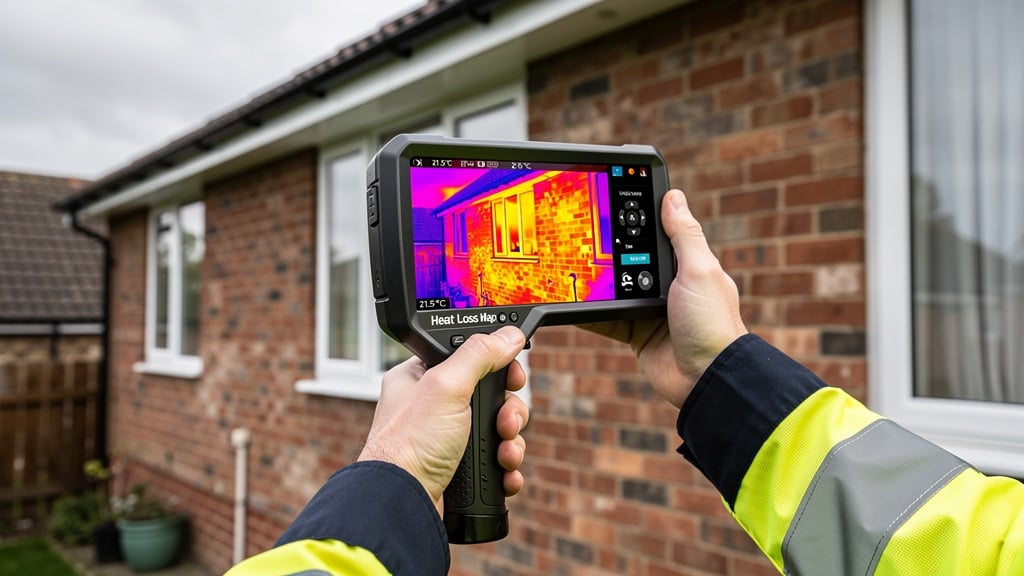
Thermal imaging reveals where properties lose heat, guiding effective improvements
Key Takeaways
- ✅ EPCs rate properties A-G based on energy efficiency and carbon emissions
- ✅ You need a valid EPC when selling or renting residential properties
- ✅ Band D is the current UK average; Band C will be the rental minimum from 2028
- ✅ Loft insulation, modern boilers, and double glazing offer the best improvements
- ✅ EPCs last 10 years—check the register before paying for a new one
- ✅ Improving your EPC reduces bills, increases comfort, and can boost property value
Frequently Asked Questions
How much does an EPC cost in Farnborough and Hampshire?
EPC costs typically range £60-120 for standard residential properties in Farnborough, Guildford, Woking, and across Hampshire and Surrey. Larger homes or those with unusual features may cost £120-200. Prices vary between assessors, so compare quotes. As Farnborough surveyors, we recommend choosing accredited assessors with good local knowledge rather than simply the cheapest option.
Can I sell my house without an EPC?
No. By law, you must have a valid EPC before marketing your property for sale. Estate agents cannot advertise without seeing an EPC first. If you proceed without one, you risk fines up to £5,000. Our RICS chartered surveyors advise getting your EPC early in the selling process to avoid delays when offers arrive.
What EPC rating do I need to rent out my property?
Currently, rental properties must achieve at least Band E. Letting properties with F or G ratings has been illegal since April 2020 (some exemptions exist). From 2028, the government plans to require Band C for all rentals. Many landlords in Farnborough and surrounding areas are already improving properties ahead of this deadline. Our chartered building surveyors and construction consultants can assess your property and recommend cost-effective improvements to meet future standards.
Does a better EPC rating increase property value?
Research suggests properties with Band B or C ratings can achieve 5-10% higher prices than similar Band E or F properties. Buyers increasingly value energy efficiency due to rising fuel costs and environmental concerns. During property valuations, our RICS qualified surveyors consider EPC ratings alongside other factors. In competitive markets like Guildford and Woking, a good EPC can be a significant selling point.
How accurate are EPC recommendations and cost estimates?
EPC improvement recommendations are standardized and sometimes generic. Cost estimates can be out of date or not reflect local prices. For example, an EPC might suggest cavity wall insulation for £500, but actual costs vary—perhaps £800-1,000 in reality. Our building surveyors in Farnborough recommend using EPC suggestions as starting points, then obtaining proper quotes from contractors. During building surveys, we provide expert advice on which recommended improvements are practical and cost-effective for your specific property.
Can I challenge an EPC rating I think is wrong?
Yes. If you believe your EPC is inaccurate, first contact the assessor to discuss concerns. Errors do occur—perhaps they recorded no insulation when you have it, or missed a new boiler installation. If the assessor won't correct mistakes, you can complain to their accreditation scheme. Alternatively, commission a new EPC from a different assessor. Keep documentation proving improvements (insulation certificates, boiler installation receipts) to share with assessors.
Final Thoughts
EPCs are more than bureaucratic paperwork. They provide valuable insights into your property's energy performance and guide effective improvements. With energy costs rising and environmental concerns growing, understanding and improving your EPC rating makes financial and practical sense.
Whether you're buying, selling, or simply want to reduce your bills, the EPC is your starting point. Focus on cost-effective improvements first—loft insulation, modern boilers, and efficient heating controls deliver the best returns. Save major investments like solid wall insulation or heat pumps for when you're confident about long-term ownership.
As RICS chartered surveyors covering Farnborough, Hampshire, and Surrey, we regularly advise clients on EPC implications during property surveying. If you're concerned about a property's energy rating or wondering which improvements to prioritize, our professional firm of chartered building surveyors can provide tailored advice based on your specific circumstances.
Need professional advice on energy efficiency and EPCs? Our RICS chartered surveyors provide expert guidance on property energy performance across Farnborough, Hampshire, and Surrey. Contact us today for professional support.