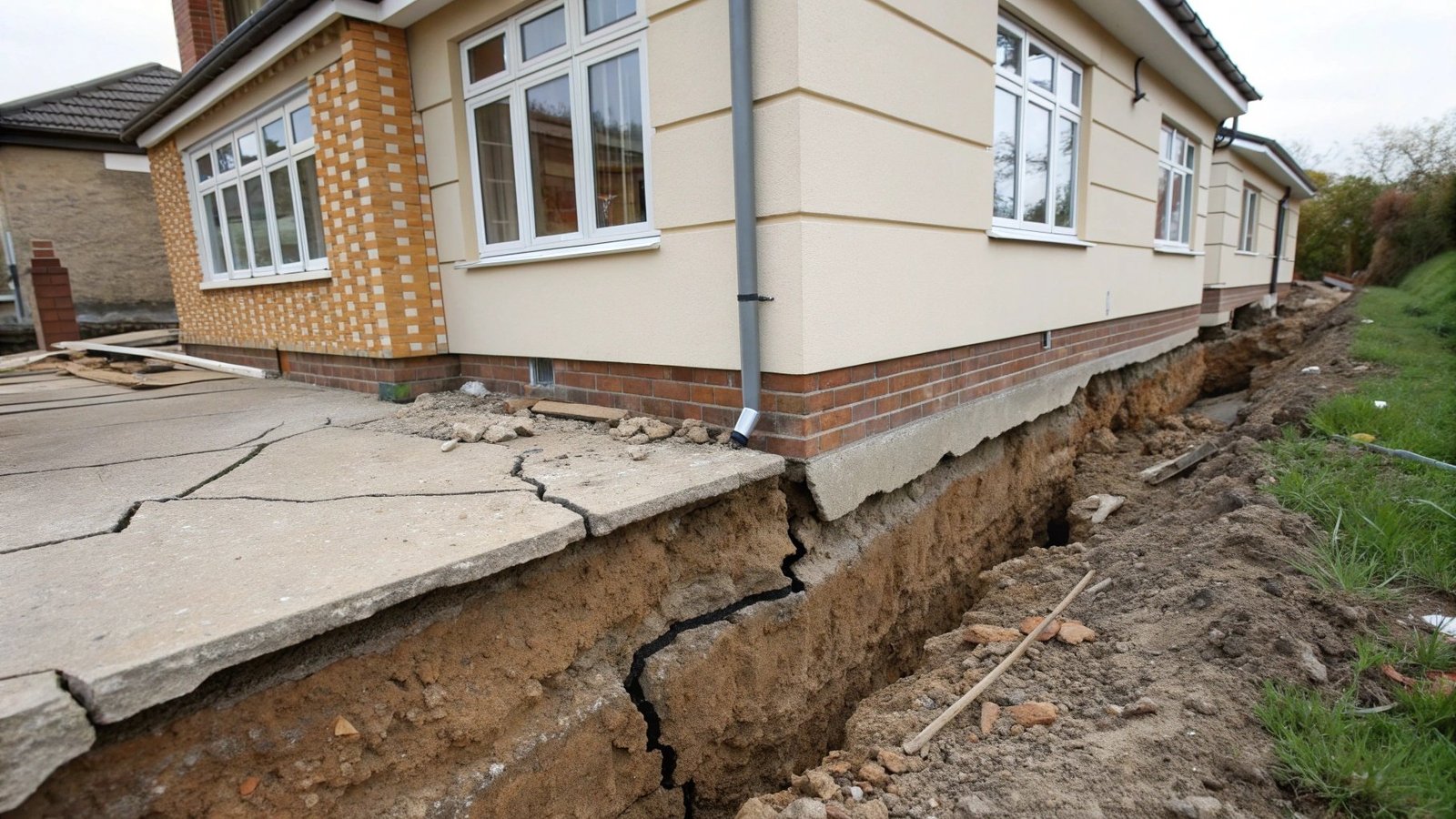
Subsidence: Causes, Signs, and Solutions
Subsidence is one of the most serious structural problems that can affect residential properties, and it's a major concern for homebuyers across Farnborough and the surrounding areas. As experienced Farnborough surveyors, our RICS chartered surveyors regularly assess properties for subsidence during building surveys. This comprehensive guide explains what subsidence is, how to identify it, and what solutions are available.
What Is Subsidence?
Subsidence occurs when the ground beneath a building sinks, taking the foundation with it. This downward movement causes structural damage, typically visible as cracks in walls. It's distinct from settlement (normal movement as a building adjusts to ground conditions) and heave (upward ground movement).
Our chartered building surveyors in Farnborough have extensive knowledge of subsidence issues affecting properties in Hampshire and Surrey. Understanding the difference between subsidence and less serious movement is crucial for property purchase decisions.
Common Causes of Subsidence
Several factors cause subsidence in properties across Farnborough, Guildford, Woking, and surrounding areas:
1. Clay Soil Shrinkage
This is the most common cause of subsidence in the UK. Clay soils expand when wet and shrink when dry. During prolonged dry periods, clay loses moisture and contracts, causing the ground to sink. This particularly affects areas of Hampshire and Surrey with clay geology.
Tree roots exacerbate clay shrinkage by extracting substantial moisture from the soil, especially large trees like oak, willow, poplar, and ash within 1.5 times their mature height from buildings.
2. Leaking Drains
Water escaping from damaged drains can wash away or soften ground beneath foundations. This type of subsidence often affects older properties with deteriorating drainage systems. Our surveyors conduct thorough assessments identifying drainage concerns during surveys.
3. Mining and Ground Works
Historical mining, quarrying, or ground extraction can cause voids underground, leading to gradual or sudden subsidence. While less common in Farnborough than in former mining regions, it's still a consideration our building surveyors in Farnborough investigate.
4. Vegetation Removal
Counterintuitively, removing large trees can cause heave (upward movement) as soil rehydrates and expands. This is technically the opposite of subsidence but causes similar structural damage.
5. Poor Original Construction
Inadequate foundations, particularly in older properties, can settle excessively under the building's weight. Victorian properties sometimes have shallow foundations vulnerable to movement.
Recognizing Subsidence: Key Signs
During property surveying, our RICS chartered surveyors look for specific indicators of potential subsidence:
Crack Characteristics
Not all cracks indicate subsidence. Our surveyors provide expert advice on interpreting crack patterns:
Subsidence Cracks Typically:
- Are wider than 3mm (approximately the width of a £1 coin)
- Appear suddenly rather than gradually
- Run diagonally, often at 45-degree angles
- Are wider at the top than bottom (tapered)
- Occur near doors and windows where walls are weakest
- Extend through entire wall thickness (visible inside and outside)
- Cause doors and windows to stick or distort
Location of Cracks
Subsidence cracks commonly appear:
- At building corners and extensions
- Near areas where drains run
- On the side of the property nearest large trees
- Where ground levels change
- Around bay windows and other projections
Additional Warning Signs
Beyond cracks, our chartered building surveyors look for:
- Doors and windows sticking or not closing properly
- Gaps appearing between walls and ceilings or floors
- Rippling wallpaper without obvious damp
- Cracks in exterior brickwork and render
- Leaning or bulging walls
Professional Assessment of Subsidence
Identifying subsidence requires expertise. Our Farnborough surveyors follow a systematic approach:
Initial Survey Assessment
During a full building survey, we:
- Map and photograph all cracks
- Measure crack widths using calibrated gauges
- Assess crack patterns and characteristics
- Investigate potential causes (trees, drains, soil type)
- Research property history and previous movement
- Check for evidence of previous repairs
This assessment determines whether movement is historic (old, stable cracks) or ongoing (active subsidence).
Monitoring
If cracks suggest potential ongoing movement, monitoring is essential. This involves installing:
- Crack monitoring gauges: Precise devices measuring movement over time
- Tell-tales: Simple indicators showing if cracks widen
Monitoring typically continues for 12 months, covering seasonal variations. Our building surveyors and construction consultants coordinate monitoring programs, liaising with structural engineers and insurers.
Structural Engineer Investigation
Confirmed or suspected subsidence requires structural engineer involvement. Engineers may recommend:
- Trial holes: Excavations exposing foundations to assess depth and condition
- Borehole surveys: Analyzing ground conditions and soil type
- Drainage surveys: CCTV inspection of drains
- Tree surveys: Arboricultural assessment if trees are implicated
These investigations inform remediation strategies. As chartered building surveyors and construction consultants, we coordinate specialist investigations as part of our project management services.
Subsidence Solutions and Repairs
Treatment depends on the cause and severity. Our surveyors offer guidance on appropriate approaches:
1. Addressing the Cause
Often, treating the underlying cause stabilizes movement:
Tree Management: If tree roots cause shrinkage, options include:
- Pruning to reduce water demand
- Installing root barriers
- In severe cases, tree removal (though this risks heave)
Drain Repairs: Fixing leaking drains removes water intrusion, allowing ground to stabilize.
Improved Drainage: Installing land drains or improving guttering prevents water accumulation near foundations.
2. Underpinning
When cause remediation isn't sufficient, underpinning strengthens foundations by extending them to deeper, more stable ground. Common methods include:
Traditional Mass Concrete Underpinning: Excavating sections beneath existing foundations and filling with concrete. This is the most common approach for residential properties.
Mini-Piled Underpinning: Drilling deep piles into stable ground. More expensive but suitable where access is restricted or ground conditions are poor.
Resin Injection: Pumping expanding resin beneath foundations to stabilize ground. A newer, less invasive technique.
Underpinning is expensive, typically costing £10,000-£50,000 depending on property size and ground conditions. Costs vary significantly based on access and complexity.
3. Structural Repairs
Once movement is stabilized, structural repairs address damage:
- Crack stitching using steel bars grouted into walls
- Wall rebuilding in severe cases
- Re-plastering and redecoration
Insurance and Subsidence
Most buildings insurance policies cover subsidence, but important points include:
Excess
Subsidence claims typically have higher excesses than standard claims, often £1,000-£2,000.
Investigation and Monitoring
Insurers fund investigation and monitoring before committing to expensive repairs. This process takes 12-24 months, which can be frustrating for homeowners.
Betterment
Insurance covers reinstating property to its pre-damage condition, not improvements. Expect basic repairs, not upgraded finishes.
Future Insurance
Once a property has subsidence history, future insurance becomes more expensive and difficult to obtain. Some insurers exclude subsidence cover entirely; others impose higher premiums or excesses.
Buying a Property with Subsidence History
Properties with previous subsidence aren't necessarily bad purchases, but require careful consideration. Our RICS chartered surveyors advise:
Key Questions to Ask
- Has the cause been identified and addressed?
- Were proper repairs completed by qualified contractors?
- Was underpinning carried out, and is it guaranteed?
- Is there a structural engineer's certificate confirming stability?
- Can insurance be obtained, and at what cost?
Impact on Value
Subsidence history affects property valuations. Well-repaired historic subsidence might reduce value by 10-20%. Active or poorly repaired subsidence could reduce value by 25-50% or make the property unsaleable.
Our RICS valuations consider subsidence impact, providing realistic market value assessments for mortgage and purchase purposes.
Mortgage Complications
Lenders are cautious about subsidence-affected properties. Requirements often include:
- Structural engineer's report confirming stability
- Evidence of proper repairs
- Insurance confirmation (including future availability)
- Specialist surveyor's assessment
Some lenders decline mortgages entirely on subsidence-affected properties, limiting your financing options.
Prevention and Risk Reduction
While you can't eliminate subsidence risk entirely, strategies reduce likelihood:
Tree Management
- Avoid planting large species near buildings
- Maintain trees at safe distances (1.5x mature height)
- Regular pruning of existing trees
- Consider removing high-risk trees if very close to buildings
Drainage Maintenance
- Keep gutters and downpipes clear and functional
- Repair leaking drains promptly
- Ensure proper surface water drainage
- Consider periodic CCTV drain surveys for older properties
Foundation Protection
- Maintain adequate soil moisture around foundations
- Avoid excavating near existing foundations without professional advice
- Install root barriers if planting near buildings
Subsidence vs. Settlement vs. Heave
Understanding distinctions helps property owners respond appropriately:
Settlement: Normal movement as new buildings adjust to ground. Expected in first few years; cracks typically narrow, shallow, and stable. Usually not a concern.
Subsidence: Downward ground movement causing ongoing structural damage. Requires investigation and often remediation. A serious issue needing expert advice.
Heave: Upward ground movement, often from soil expansion after tree removal. Can be as damaging as subsidence and requires similar investigation and treatment.
Our qualified chartered surveyor professionals distinguish between these movements during surveys, providing accurate diagnoses and recommendations.
Geographic Considerations in Hampshire and Surrey
Properties in Farnborough and the surrounding areas face specific subsidence risks:
Soil Composition: Parts of Hampshire and Surrey have clay soils prone to shrinkage. Our surveyors have extensive knowledge of local geology and typical problems affecting the region.
Tree Population: Mature tree-lined streets are common in Guildford, Woking, and Farnborough. Beautiful but potentially problematic, particularly during drought years.
Property Age: Many Victorian and Edwardian properties have shallow foundations. While they've stood for over a century, they're more vulnerable to subsidence than modern builds with deeper foundations.
Frequently Asked Questions
Are all cracks signs of subsidence?
No. Most cracks result from thermal movement, settlement, or minor building movement. Our chartered building surveyors assess crack patterns, widths, and characteristics to determine whether they indicate subsidence or are less serious. Professional assessment is essential for accurate diagnosis.
How long does subsidence take to fix?
The complete process typically takes 18-36 months including investigation (12 months monitoring), insurance assessment (2-4 months), and repairs (2-6 months). While frustrating, this timeline ensures movement has stopped before expensive underpinning is undertaken.
Will subsidence repairs guarantee no future movement?
Proper repairs should stabilize the property long-term, and reputable contractors provide 10-year guarantees. However, no guarantee is absolute – ground conditions can change. Maintaining trees and drains properly reduces future risk.
Should I avoid properties near trees?
Not necessarily. Many tree-lined properties never experience subsidence. However, be aware of risks, ensure adequate separation between large trees and buildings, and maintain trees responsibly. Our surveyors provide specific advice based on tree species, proximity, and soil type during surveys.
Can I get a mortgage on a property with subsidence?
Obtaining mortgages on subsidence-affected properties is challenging but possible if: the cause has been remedied, proper repairs were completed, structural stability is confirmed, and insurance is available. Our detailed report helps lenders assess risk. Some specialist lenders deal with subsidence cases specifically.
Why Choose Farnborough Surveyors
Subsidence assessment requires expertise and experience. Our professional firm of chartered building surveyors brings specific advantages:
Local Expertise: As surveyors and construction consultants working from offices in Farnborough, we understand local ground conditions, typical construction methods, and common issues affecting residential and commercial properties across Hampshire and Surrey.
RICS Qualifications: All our surveyors are regulated by the Royal Institution of Chartered Surveyors, maintaining the highest professional standards.
Comprehensive Service: Beyond identifying potential subsidence, we coordinate necessary investigations, liaise with structural engineers and insurers, and provide ongoing advice. Our project management expertise ensures remediation projects run smoothly.
Clear Communication: We explain technical issues in accessible language, empowering clients to make informed decisions about property purchase and ownership.
Contact our expert RICS chartered surveyors for professional assessment and advice on subsidence concerns. Book Your Structural Survey