Complete Guide to Damp Problems in UK Properties
Damp is one of the most common problems in UK homes. As RICS chartered surveyors, Farnborough Surveyors regularly identify and assess damp issues during building surveys across Hampshire and Surrey. Understanding the different types of damp helps property owners and buyers make informed decisions.
What Causes Damp in Properties?
Damp occurs when excess moisture affects building materials. In the UK climate, with regular rainfall and moderate temperatures, properties face constant moisture challenges. Our chartered building surveyors identify three main types of damp during our inspection of the property: rising damp, penetrating damp, and condensation.
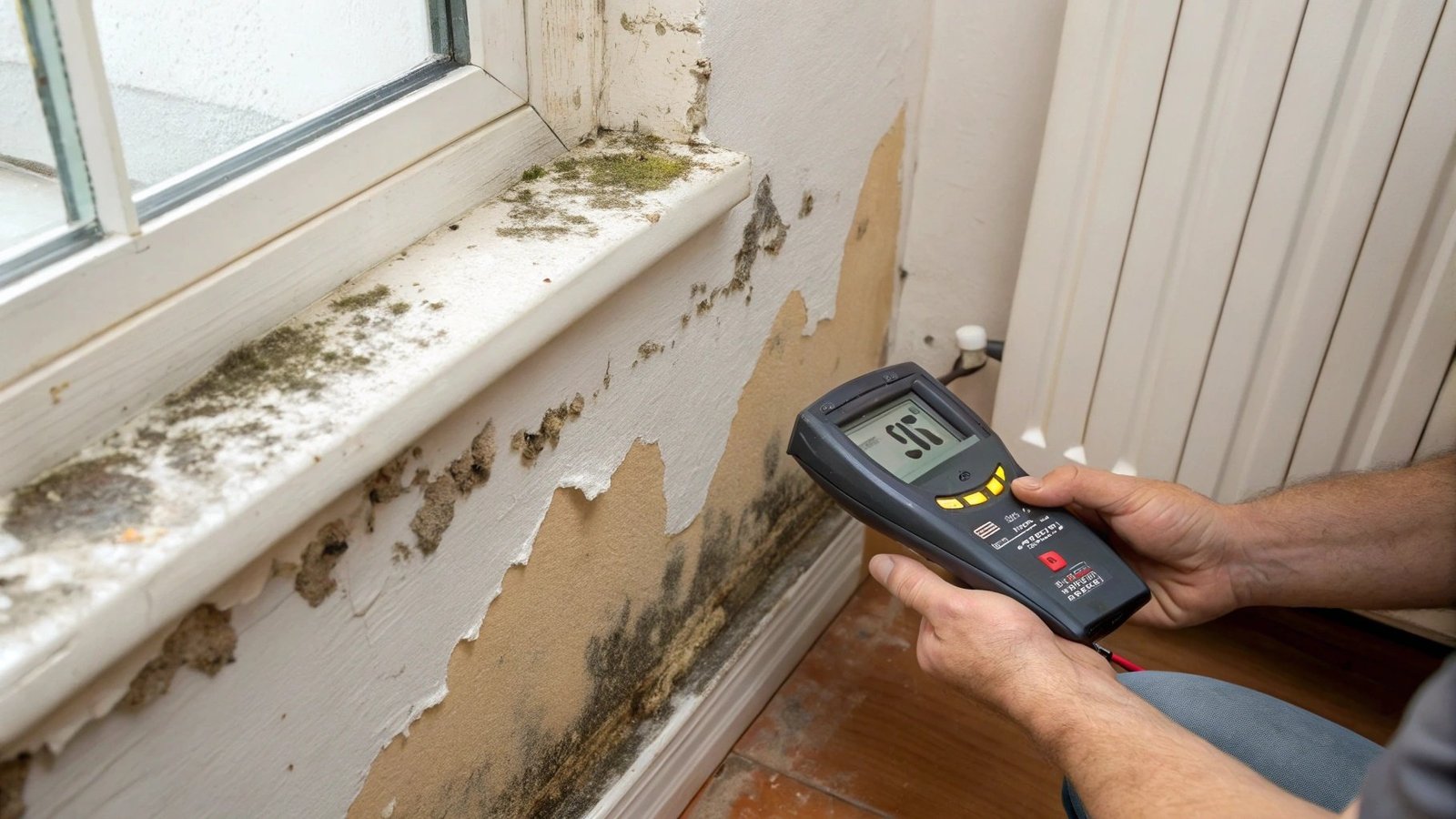
Each type has different causes and requires specific treatment. During full building surveys in Farnborough and the surrounding areas, our surveyors use moisture meters and visual inspection to diagnose damp problems accurately.
Rising Damp Explained
What is Rising Damp?
Rising damp happens when ground moisture moves upward through walls by capillary action. It typically affects ground floor walls, rising to about one meter high. This problem is common in older properties where the damp proof course has failed or was never installed.
Victorian properties throughout Hampshire and Surrey often experience rising damp. Many were built without effective damp proof courses. Even properties with original slate damp courses can develop problems when the slate becomes damaged or bridged.
Signs of Rising Damp
Our building surveyors look for several telltale signs during residential property surveys:
- Tide marks on walls, usually up to 1 meter from floor level
- Damp or crumbling plaster in affected areas
- Peeling or bubbling wallpaper and paint
- White salt deposits (efflorescence) on walls
- Rotting skirting boards and floor timbers
- Musty smell in affected rooms
- Discolored patches on wall surfaces
During building surveys, we use calibrated moisture meters to measure moisture levels scientifically. High readings at floor level decreasing with height indicate potential rising damp. However, other issues like leaking pipes or penetrating damp can produce similar readings, so expert diagnosis is essential.
Treating Rising Damp
Treatment involves installing an effective damp proof course. Modern solutions include:
- Chemical damp proof course injection - drilling holes and injecting water-repellent chemicals
- Physical damp proof course - cutting into walls and inserting impermeable material
- Electro-osmotic systems - using electrical charges to repel moisture
- Replastering with waterproof render systems
Chemical injection is most common for treating rising damp in existing properties. Our chartered surveyors provide expert advice on suitable treatments and can recommend specialist damp proof companies. Treatment costs vary depending on property size and damp extent, typically ranging from £1,500 to £5,000 for a standard terraced house.
Penetrating Damp
Understanding Penetrating Damp
Penetrating damp occurs when water enters through external walls, roofs, or windows. Unlike rising damp's horizontal tide marks, penetrating damp appears as patches anywhere on walls, often worsening during wet weather.
This type of damp is extremely common in properties across Farnborough, Guildford, and Woking. Our surveyors identify penetrating damp in both old and modern properties during home surveys and building surveys.
Common Causes of Penetrating Damp
During our detailed inspection of the property, we look for these common causes:
- Defective roofs: Missing or slipped tiles, damaged flashing, blocked gutters
- Wall problems: Cracked render, damaged pointing, porous bricks
- Window issues: Failed seals, damaged frames, poor installation
- Plumbing leaks: Hidden pipe leaks within walls or floors
- Poor drainage: Overflowing gutters, blocked downpipes
- Cavity wall issues: Debris bridging cavities, failed cavity wall insulation
- Ground levels: Soil or paving above damp proof course level
Farnborough Surveyors have extensive knowledge of typical penetrating damp issues in Hampshire properties. Older solid wall properties are particularly vulnerable, lacking the cavity protection of modern construction.
Identifying Penetrating Damp
Our qualified chartered surveyors look for:
- Damp patches on walls, often at specific points
- Staining that worsens during rain
- Damp appearing on upper floors or near roofline
- Moisture readings localised to specific areas
- External defects corresponding to internal damp
The key difference from rising damp is location and pattern. Penetrating damp can appear anywhere and often follows a path from external defect to internal manifestation.
Remedying Penetrating Damp
Treatment focuses on identifying and repairing the entry point. Common solutions include:
- Repointing brickwork and repairing render
- Replacing damaged roof tiles and fixing flashing
- Clearing and repairing gutters and downpipes
- Sealing around windows and doors
- Fixing plumbing leaks
- Lowering external ground levels
- Applying water-repellent treatments to walls
Costs vary significantly depending on the cause. Simple repointing might cost a few hundred pounds, while roof repairs could run to several thousand. Our detailed report helps you understand necessary repairs and budget accordingly.
Condensation Damp
What is Condensation?
Condensation is the most common form of damp in UK homes. It occurs when warm, moisture-laden air contacts cold surfaces, causing water droplets to form. This is particularly problematic in modern homes with improved insulation but inadequate ventilation.
During property surveys throughout Surrey and Hampshire, we frequently find condensation issues, especially in bathrooms, kitchens, and bedrooms. It's often mistaken for more serious damp problems.
Causes of Condensation
Condensation results from everyday activities producing moisture combined with poor ventilation:
- Cooking, bathing, and washing creating steam
- Breathing and perspiration adding moisture
- Drying clothes indoors
- Poor ventilation trapping moisture
- Cold external walls and single-glazed windows
- Inadequate heating creating cold spots
- Blocked airbricks and vents
Modern energy-efficient homes often suffer more condensation. Improved insulation and draught-proofing reduce natural ventilation, trapping moisture inside. Properties in reasonable condition still need adequate ventilation to prevent condensation.
Signs of Condensation
Our chartered surveyors identify condensation through:
- Water droplets on windows, especially mornings
- Mould growth on walls, ceilings, and corners
- Black spots around windows and in corners
- Musty odors in poorly ventilated rooms
- Wallpaper peeling in patches
- Damp feeling but no moisture meter readings in walls
Distinguishing condensation from other damp types is crucial. Moisture meters typically show low readings in walls affected by condensation, with problems concentrated on surface materials rather than within wall structures.
Preventing and Treating Condensation
Solutions focus on ventilation and moisture reduction:
- Improve ventilation: Install extractor fans, open windows regularly, unblock vents
- Increase heating: Maintain consistent temperatures, avoid cold spots
- Reduce moisture: Dry clothes outside, use lids when cooking, vent tumble dryers
- Improve insulation: Double glazing, wall insulation to raise surface temperatures
- Dehumidifiers: Mechanical moisture removal in problem areas
- Anti-condensation paint: Special paints for high-risk areas
Treatment is usually the least expensive damp remedy. Simple lifestyle changes and improved ventilation often resolve condensation without major building work.
How Chartered Surveyors Assess Damp
During building surveys and home surveys, Farnborough Surveyors use several assessment methods:
Visual Inspection
Our experienced building surveyors examine properties for visible damp signs. We check walls, ceilings, floors, and external elevations. Years of surveying properties in Farnborough and the surrounding areas means we recognize typical damp patterns immediately.
Moisture Meter Testing
We use calibrated electrical resistance and capacitance moisture meters. These devices measure moisture levels in walls, identifying affected areas and severity. Different readings throughout a property help diagnose damp type and extent.
Environmental Assessment
We consider property age, construction type, location, and condition. Victorian terraced houses have different damp risks than modern detached properties. Our surveyors have extensive knowledge of typical issues in Hampshire and Surrey property types.
Detailed Reporting
Our detailed report includes:
- Identification of damp areas with photographs
- Assessment of damp type and likely causes
- Severity ratings for each issue
- Recommendations for further investigation if needed
- Guidance on treatment options and approximate costs
- Expert advice on urgency and priority
When to Seek Professional Advice
If you're buying a property, a full building survey from RICS chartered surveyors is essential for accurate damp assessment. Signs that warrant professional survey include:
- Visible damp patches or staining
- Musty smells suggesting hidden damp
- Recent decorating that might hide problems
- Older properties without recent damp treatment
- Properties with known history of damp issues
- Signs of poor maintenance or neglect
Don't rely on simple RICS Condition Reports for properties where damp is suspected. A comprehensive full building survey provides the thorough inspection needed to identify and assess damp problems properly.
Damp and Property Purchase
Finding damp during property surveying doesn't necessarily mean you shouldn't proceed with your property purchase. Our chartered surveyors provide expert advice helping you:
- Understand the severity and implications
- Get accurate treatment cost estimates
- Negotiate price reductions with sellers
- Make informed decisions about proceeding
- Plan remedial work budgets
Many properties have minor damp issues that are inexpensive to resolve. Some damp problems are serious and costly. Our professional survey report gives you the information to decide wisely.
Preventing Damp Problems
Property owners can take steps to minimize damp risks:
- Regular maintenance of roofs, gutters, and external walls
- Adequate ventilation throughout the property
- Keeping ground levels below damp proof course
- Prompt repair of any defects allowing water entry
- Regular heating to maintain dry conditions
- Clear airbricks and vents of obstructions
- Monitor vulnerable areas for early signs
Conclusion
Damp is a common issue in UK properties, but understanding the different types helps address problems effectively. Whether you're experiencing rising damp, penetrating damp, or condensation, accurate diagnosis is essential for appropriate treatment.
Farnborough Surveyors provide expert property surveying services identifying and assessing damp problems in residential and commercial properties throughout Hampshire and Surrey. Our RICS chartered surveyors have extensive knowledge of local property types and typical damp issues across Farnborough and the surrounding areas.
If you're buying a property and concerned about potential damp, our full building survey provides comprehensive assessment. We deliver detailed reports with clear explanations and practical recommendations, helping you make informed decisions about your property purchase.
Concerned About Damp?
Contact Farnborough Surveyors for professional building surveys throughout Hampshire and Surrey. Our chartered building surveyors identify damp problems and provide expert advice for your property purchase.
Get Your Free Quote